
I Told You So (Te l’avevo detto) (directed by Ginevra Elkann) is an atmospheric, though cluttered, ensemble tale of interconnected characters working through inner conflict as a heat wave plagues Rome in January.
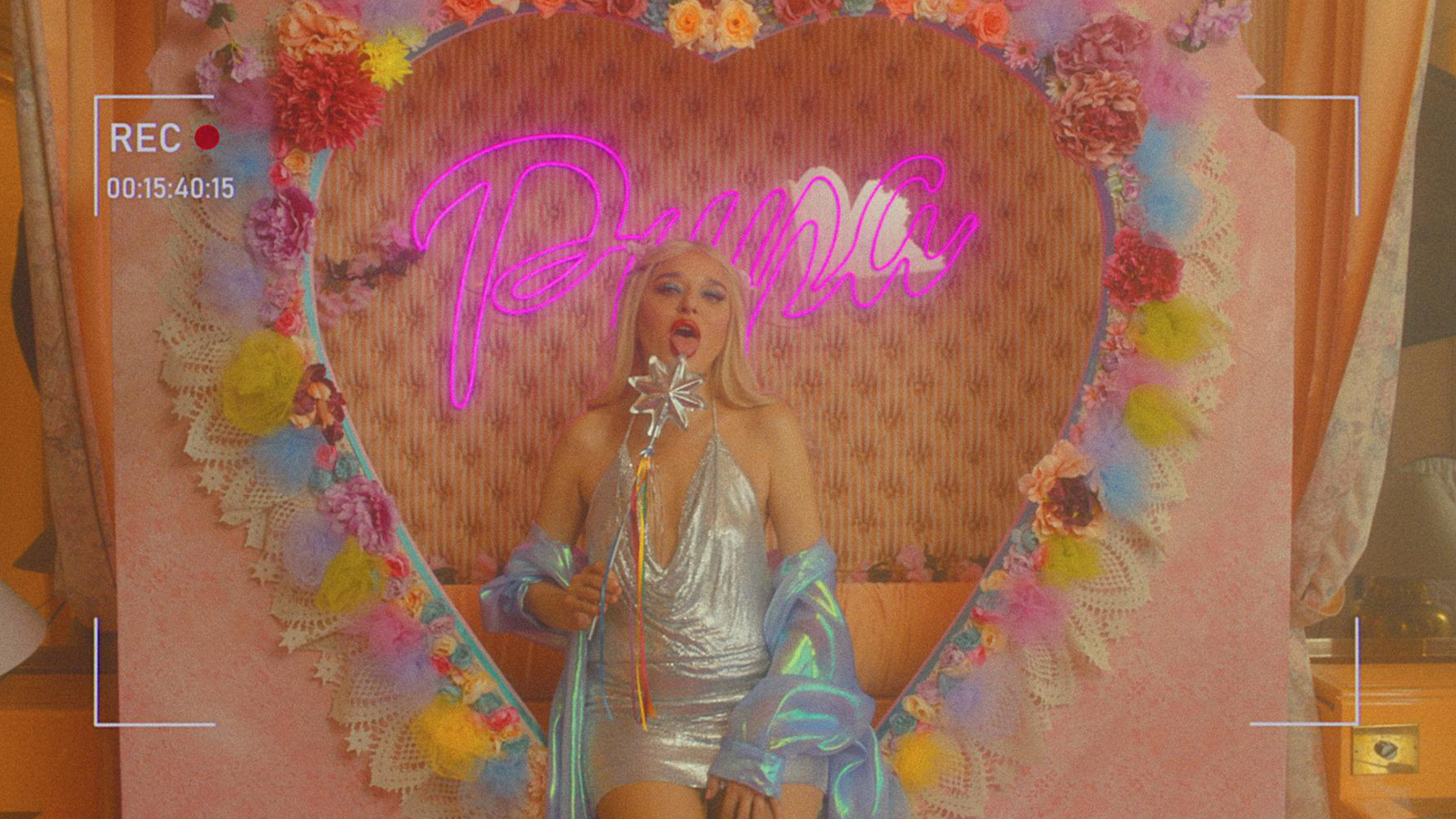
From this complex and over-linked web of narrative, the standout storyline, and performance, is that of Valeria Golino as Pupa, a former adult star set to launch her comeback as a singer. Everything about her is artifice, from her wig, to Botox-infused cheeks and impossibly plump lips, speaking to her fan base through webcam, back against a neon, scrappily staged backdrop. Golino’s spacey, vapid performance is such a foil of energy and turmoil from the frantic, outward desperation of the other characters, but her cool ambivalence is a nice reprieve from the high-strung energy.
In Pupa’s orbit is Gianna, a former friend turned obsessive stalker, determined to find Pupa on her comeback night; Gianna’s daughter Mila, who cares for an elderly woman while caring for, and setting boundaries with, her troubled mother; their priest Father Bill, an American expat and drug addict, whose path intersects with Caterina, a recovering alcoholic trying to see her son for his birthday. The interconnectivity across stories doesn’t particularly add up to anything, and serves more as narrative mechanics than some thematic, emotional synthesis.
What makes I Told You So frustrating and somehow over-long, even at 100 minutes, is its scattered story and not being able to settle into any particular setting. The interior spaces are cluttered, messy, and believably lived in, but all look similar enough that it’s difficult to orient where each scene is, who is there, and why. All the while, as the heat wave rages on, an atmospheric orange hue grows stronger and stronger, culminating in a blinding effect, mushing these stories together with no clear meaning, outside of the film reaching its belabored ending. There is so much jumping around that the characters and stories don’t feel fully defined, leaving the audience little to hold onto before they’re thrust into the next dysfunctional setting. There is no momentum, or even real energy, outside of Pupa’s storyline which, however cheap and tawdry, is somehow the most put-together and magnetic of the whole ensemble.
In particular the scenes in English, between the Americans Father Bill and his sister Frances, feel starkly unnatural, with exposition-laden dialogue that feels completely fake, spoken with unconvincing, unnatural rhythm. Perhaps the artifice of these scenes, paired with that of Pupa’s life and image, and the impossibly orange light emanating in the background, are meant to add up to a looming unreality, but for end, and for what purpose?
If the overall intent is to turn up the heat, as tensions and relationships come to a boil, the interconnected nature of the stories is inconsequential, as the resolution or peace between individuals is through their inter-relationships, not some greater community they represent: the story is of Romans, not of Rome. The orange-tinged finale is not some synthesis or breakthrough, but further wandering of individuals. At best, I Told You So is an exercise in mood and lighting, but its meandering, impatient storytelling leaves an unsatisfying impact.
I Told You So is an official selection of the 50th Seattle International Film Festival! Explore more info at siff.net/festival.
Leave a Reply